
How to set up an artist rider
Sending an artist rider before signing a contract smooths out show planning. Learn how to create & eSign this important document using SystemOne.

Max Mäder
Niels van Loo
Anna Breitenfeld


.jpg)
In the live performance branch of the music industry, an artist rider is a communication tool to bridge the artist’s vision with the promoter’s reality. But it’s rarely just one document, and it passes through many hands before the show begins.
It specifies what the artist needs for a great performance, and traditionally includes two parts:
- Technical rider: Stage, venue, and equipment specs.
- Hospitality rider: Food, drinks, and comfort.
The rider is often negotiated between the artist manager and the promoter or venue booker, but booking agents handle these documents during the contract signing and production stages of a deal.
In this article, you’ll learn the ins and outs of artist riders and how to set up your contract and rider for automatic advancing using SystemOne.
Who needs access to artist riders?
The rider is a living document that gets handled by different moving parts, from the management team to the venue staff. Here’s your A-team:
The artist manager (the creator)
The process usually starts with the artist manager, who Max Mäder (Founder and artist manager at 1182) describes as an "extension of the artist." It’s their job to articulate the artist’s needs and requirements in the rider to produce a great show and protect their well-being.
The booking agent (the distributor)
Once the manager compiles the needs, the agent formats them. Niels van Loo (Founder and booking manager at Parachute Booking) says he takes the info from management and makes sure it “looks nice in the Word document" before sending it out to promoters.
The promoter or booker (the gatekeeper)
The rider eventually lands on the desk of someone like Anna Breitenfeld (Festival booker at Open Beatz). She reviews the reasonableness, costs, and logistics needs of rider requests, and checks them against the contract.
The production manager (the technical expert)
Somebody with the right expertise needs to approve the technical specs in the rider. The venue booker or promoter isn’t usually that person—the production manager and their crew review the technical rider and report on its feasibility.
They’ll also recommend any adjustments or workarounds to the promoter or booker, who will liaise with the booking agent until both parties agree.
The tour manager (the logistician)
The music industry’s very own all-rounder, tour managers are with the artist wherever they go—and make sure they get there on time, fed, and ready to put on a show.
Max frequently tour manages his own artists, and says that this role requires specific input into the rider to handle logistics and hospitality between shows (e.g. on the tour bus).
Components of an artist rider
While many people use "rider" as a blanket term, seasoned professionals often break it down into specific documents to avoid confusion. Try not to think of it as a single document, as it can get super detailed and messy.
{{max-1182-15}}
1. The general rider
What it is: This document handles the repetitive, dry logistics to keep the other riders clean.
What it includes: Point of contact info, travel party size, vehicle requirements, and dietary restrictions.
{{max-1182-16}}
2. The hospitality rider
What it is: This document focuses on the human element and the artist's well-being.
What it includes: Backstage furniture, towels, water, meals, alcohol, and travel and hotel specifications.
{{max-1182-17}}
3. The technical rider
What it is: This is the instruction manual for the production of the show.
What it includes: Stage setup, inputs and outputs, power requirements, lighting and Special Effects (SFX), access, and licenses.
{{niels-parachute-12}}
4. Bonus: the backline rider
Max likes to add a separate part to the tech rider for the backline equipment. If the artist is traveling without their own sound equipment, like drum kits or amps, this document tells the venue or promoter what needs to be rented locally.
A backline rider also makes a lot of sense if you have Keith Jarrett performing on a baby grand piano in Köln ;)
{{max-1182-18}}
What can and can’t you ask for in a rider?
The rider is a reasonable request list, not a blank check. And to put it bluntly, the less of a ticket seller your artist is, the less leverage you have to ask for stuff.
When booking for Open Beatz, Anna reviews these documents with a critical eye, specifically looking for discrepancies with the contract.
How to use SystemOne for artist riders & automating the signing process
A well-put-together rider is useless if it gets lost in the mail. Niels uses SystemOne to ensure the rider is treated as a binding part of the agreement.
{{niels-parachute-13}}
In SystemOne’s eSign flow, the rider and other uploaded files automatically merge with the contract and become one document.
Let’s go through the steps below.
1. Create your documents
SystemOne has a bunch of Word, Excel, and email templates already available to you on the platform. But you can also upload your own eSign ready templates with as much styling as your heart desires (within your brand guidelines, of course!).
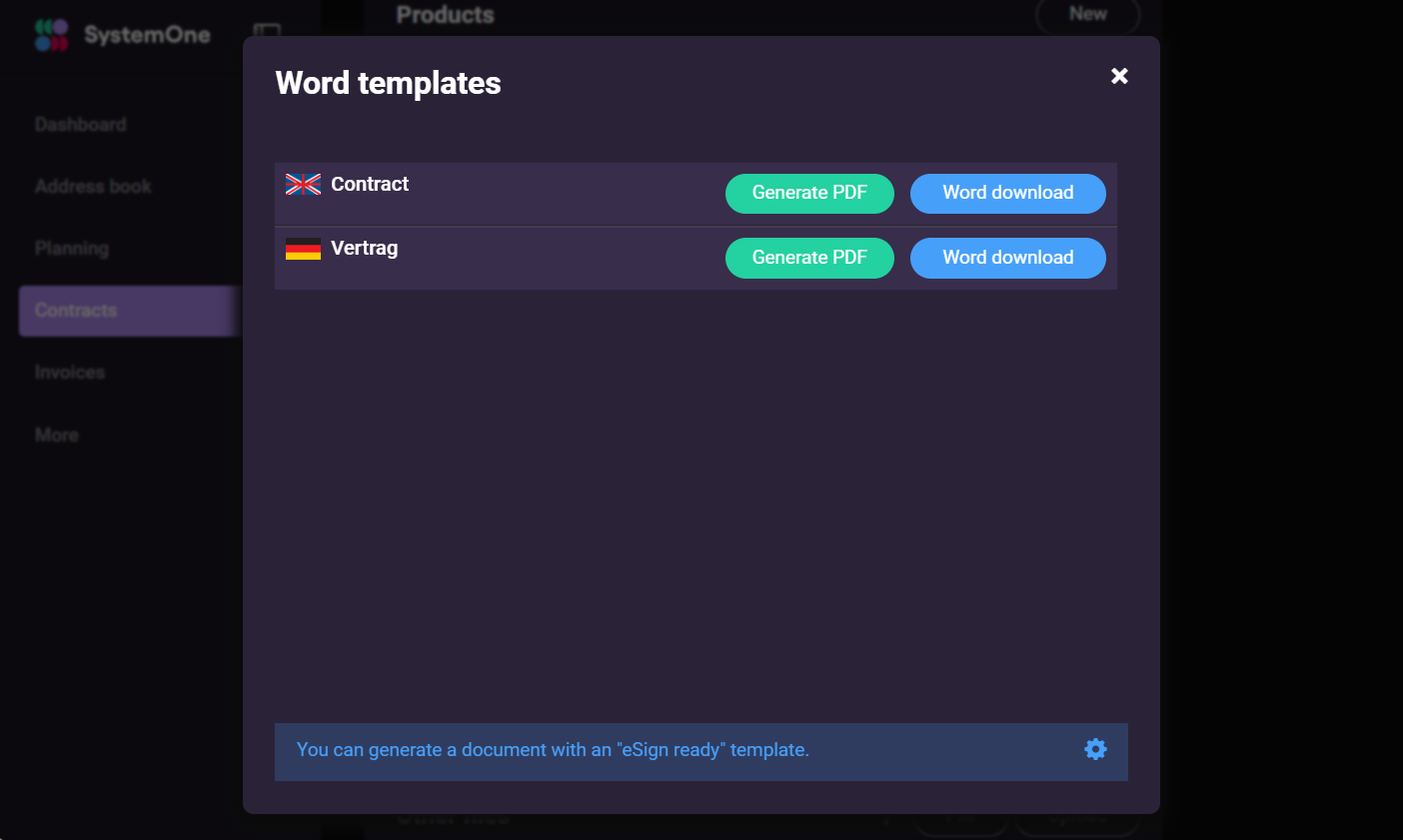
Check out our support guide on how to edit your Word templates.
2. Integrate the rider into the contract
In the draft stage in eSign, you can add multiple Word templates, PDFs, or other file uploads that need to be signed. When you send out the document for signature, these documents will automatically be stitched together into one file and sent via email.
This means you can upload technical and hospitality riders in the artist profiles under the files section, or upload them in the contracts detail view when creating a new contract.

3. Use eSign for commitment
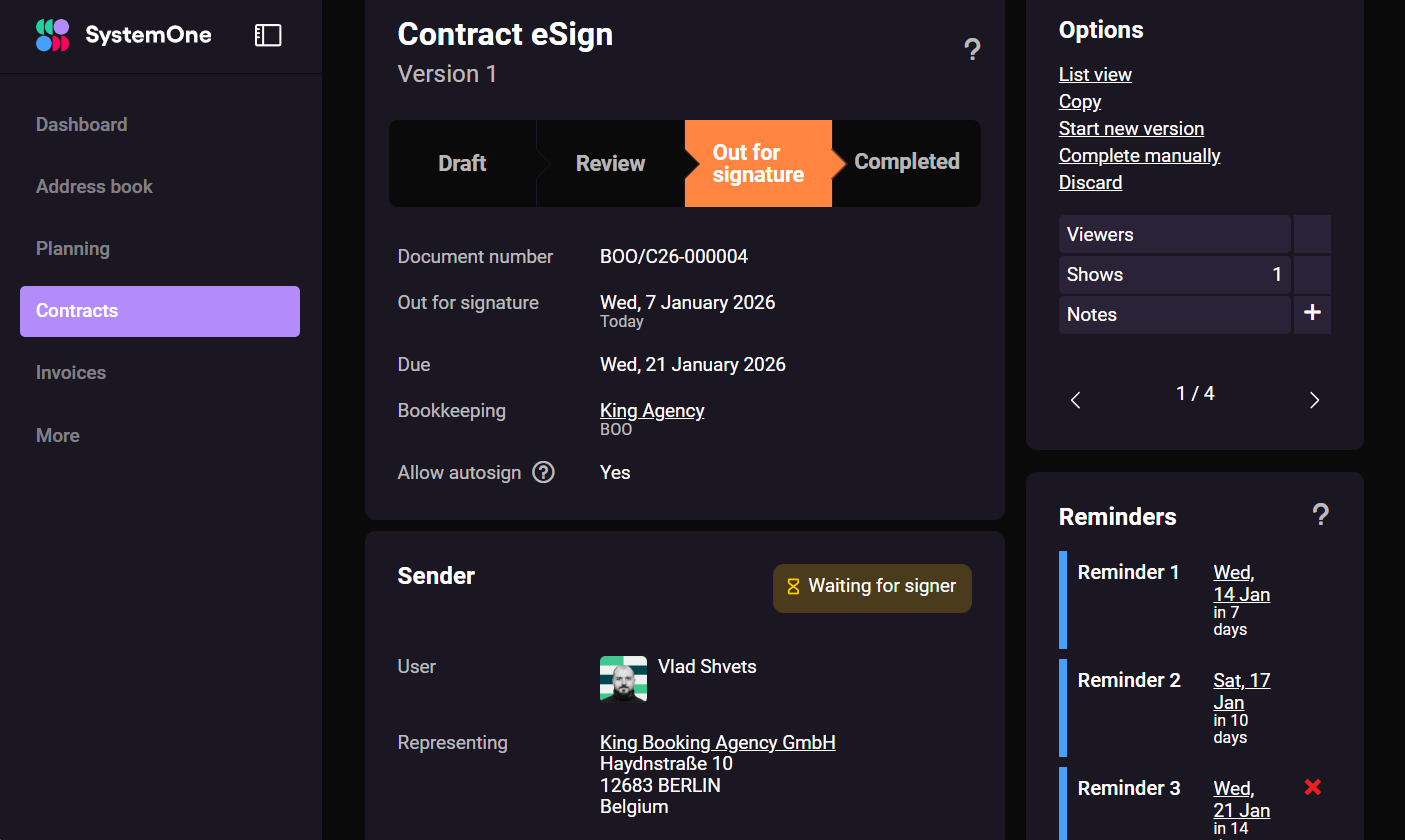
Get those autographs—err, we mean, signatures! Once you’ve reviewed your contract docs, you can send the eSign invitations.
SystemOne enables you to choose the amount and interval of reminders sent to signatories, and you can check the status of the contract eSign at any time.
{{anna-open-beatz-9}}
Ready to switch to SystemOne?
SystemOne enables agents to duplicate successful setups from previous shows, saving you hours of admin work. Niels worked with SystemOne at his previous agency. When he started his own agency, he could easily set up his new account using the same existing structure.
{{niels-parachute-14}}
With powerful features for combining rider files and eSigning contracts, SystemOne could be a great alternative to other booking software for your agency.
Request a free trial to explore our platform for yourself, or book a demo with the SystemOne team.
"First of all, I don't really use the term ‘artist rider.’ I'm working with three riders, not only two: general, hospitality, and technical."

"For me, I'm always doing a general rider that has the overall basic information… and I'm trying to keep it as short as possible."
"The hospitality part is mainly what we require for the comfort of the artists themselves."
"There's a backline rider that I attach as well in case backline is rented by the venue or locally from a promoter."
"I get all the info from the artist or their management… It's just basically a Word template where you put a little picture of their tech setup. And you also list up all the tech requirements."

"In SystemOne, I can add the rider to the end of the contract and make sure the right people not only read it but sign it."
"I could basically copy the structure that I was working with from the former agency... and it saved me like a week with setting up stuff."
"Using SystemOne’s eSign for document merging and signing is very convenient."
"Some agencies send their contracts to us through SystemOne. I can say it's useful because I can easily look up the contracts in my mailbox."

Recent articles
.png)
.png)

Never miss an update


